
AI Plan Ingestion
Your plan becomes the game engine's ruleset in a guided, reviewable process. No manual configuration, no custom coding — and when the plan is updated, the scoring updates with it.
Cyber Incident Response Tabletop Exercise


Every license is a dedicated hosted instance, deployed and kept up to date for you. Nothing to install on any seat.
Concord Lantern is not a tabletop discussion. AI-assisted ingestion reads your cyber crisis response plan and maps every step, owner, and deadline into a scoring framework. From there the platform generates unlimited incidents against your plan's scope — ransomware, data breach, insider threat, supply chain — and runs your team through them under a clock that doesn't stop.
Every expected action is measured on four axes, with the role your plan names acting as a gate: an obligation discharged by the wrong person earns none of the points. What comes out is a timestamped, team-attributed record of readiness — usable for internal improvement and for external audit, compliance, and budget justification.
Your plan becomes the game engine's ruleset in a guided, reviewable process. No manual configuration, no custom coding — and when the plan is updated, the scoring updates with it.
Unique, realistic incidents calibrated to your plan's scope. Every exercise is fresh, and every scenario tests a different part of the plan.
A live, timed exercise with genuine operational pressure — incomplete information, competing priorities, and a clock that doesn't stop.
Every expected action measured on accuracy, completeness, timeliness, and sequence.
Run the same plan with a full room, a single analyst, or any mix. Empty seats are filled by AI-driven NPCs with their own personas and response speeds, so one person can rehearse the whole plan without waiting on a room to assemble.
An auditable record of team and organizational preparedness — evidence for internal reporting, external audit, regulatory compliance, and budget justification.
Re-run after plan updates or identified gaps and track performance over time — the kind of trend evidence that justifies security investment to leadership and boards.
AI-assisted ingestion maps your crisis response plan into the engine's scoring ruleset.
AI creates a realistic incident tailored to your organization's context — infinitely repeatable.
Players execute the plan under pressure: emails, work products, notifications, decisions.
The platform measures every action against the plan and produces the certification record.
Quarterly readiness drills against your actual IR plan — not generic scenarios — with improvement tracked across exercises for CISO and board reporting.
Meet CISA, NIST, and sector-specific readiness requirements with documented, tested, and scored exercises.
Offer credentialed cyber crisis response training backed by scored exercise records and objective performance data.
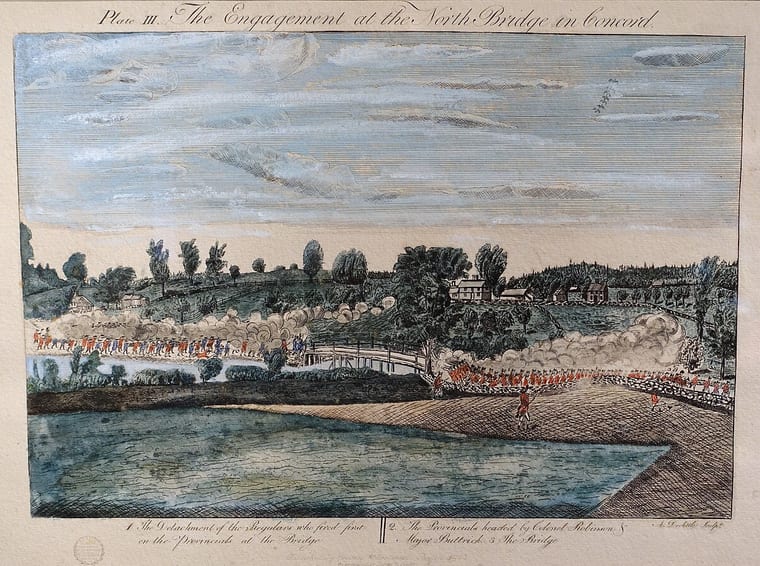
On the night of 18 April 1775, two lanterns hung for barely a minute in the steeple of Boston's Old North Church — a signal arranged days in advance. By dawn, militia were assembling at muster points assigned months earlier, and the stores at Concord had already been moved to safety. The Concord alarm was a genuine crisis response plan, and none of it counted until the night it was executed under pressure, in the dark, with incomplete information. A plan proves itself the night it is used, not the day it is written.